Brighter Light Therapy

Brighter Light Therapy

Brighter Light Therapy

Change More Than Your Mood . . .

The Science Behind Light and Mood

I recently listened to Daniel Amen speak about the connection between brain health and behavior—summed up in his phrase: “Change your brain, change your pain.”

One of the tools he highlighted was bright light therapy—the idea that exposure to light, especially in darker seasons, can significantly impact mood, clarity, and emotional health.

He shared that our brains are intricately linked to our behavior, and recent studies highlight the profound impact of light on our mental and emotional well being.  Bright light therapy has emerged as a powerful tool in enhancing mood, clarity and overall emotional health.  By stimulating the effects of natural sunlight, this therapy helps regulate the body’s internal clock, improving sleep patterns and boosting serotonin levels. 

 Understanding the connection between light exposure and brain health opens doors to new possibilities for emotional resilience. As we harness the benefits of bright light therapy, we not only uplift our spirits but also lay the foundation for a healthier, more vibrant life. This approach is not just about feeling better; it’s about fostering a sustainable change that empowers you to thrive.  

It makes sense. 

Why are people drawn to the beach?
Why do long days in the sun  seem to reset something deep inside us? 

But what if there’s a brighter light-one that doesn’t just shift your mood, but actually transforms your life?  


Discover Brighter Light Therapy

You Can Transform Your Life Through His Divine Presence

In Second Corinthians, the Apostle Paul the Apostle describes a moment from the life of Moses.

After meeting with God, Moses’ face literally radiated light—so intensely that people couldn’t look at him. He had to wear a veil.

Why?

Because he had been in the presence of God.

Then Paul makes a stunning claim:

That same access to God—the same transforming light—is now available to us.

No veil. No distance. No barriers.

“And we all, with unveiled face, beholding the glory of the Lord, are being transformed… from one degree of glory to another.” (2 Corinthians 3:18)

This is Brighter Light Therapy.

Brighter Light Therapy offers a unique opportunity to experience profound transformation by immersing yourself in the presence of God. This isn’t about external changes but a deep, internal renewal that aligns you with your true purpose. As you engage with this spiritual discipline, you open yourself to a light that transcends the physical, illuminating your path and reshaping your soul. Embrace this journey and witness the gradual, yet powerful, shift in your life as you are transformed “from one degree of glory to another”. 

It’s typically a four-step process:  


Turn Toward the Light

Begin your journey by consciously choosing to redirect your focus towards divine guidance.

“Whenever anyone turns to the Lord, the veil is taken away.” (2 Corinthians 3:16)

This is the moment of reorientation.

You stop walking your own path—and choose His.

For some, that’s conversion.
For others, it’s surrender.

Either way, it’s a decisive shift:
You turn. You begin again.

This pivotal step involves a heartfelt decision to embrace a path illuminated by spiritual wisdom.

Sit in His Presence

This is what many have called contemplative prayer.

Augustine of Hippo described this silent process as “entering into joy.”
More recently, John Mark Comer framed it this way, :

“It’s me looking at God, looking at me in love.”

Not striving.
Not performing.
Not filling the silence.

Just being with Him.

“If we walk in the light, as He is in the light, we have fellowship…” (1 John 1:7)

This is where transformation begins.

Engage in contemplative prayer, allowing yourself to be enveloped by the tranquility of God’s presence.

This is a time for silent reflection, where you simply enjoy the presence of your Maker, and listen to His voice.  

Let the Light Do the Work


You are not the one who changes you.

God is.

“We… are being transformed into the same image…” (2 Corinthians 3:18)

Henri Nouwen wrote:

“If there is any discipline the Christian leader of the future will need, it is the discipline of dwelling in the presence of the One who keeps asking us, ‘Do you love me?’”

This is the work:  Stay in the light long enough to be changed by it.

Allow the transformative power of God’s light to work within you. This is not about your efforts but about surrendering to the divine process that reshapes your soul into a reflection of His image.

Return Again and Again . . .

Transformation is not instantaneous.

It happens:
“from one degree of glory to another.” (2 Corinthians 18b ESV) 

Gradual.
Layered.
Formed over time.

Just like physical light therapy requires repeated exposure—
so does this set of changes . . . 

I’ve been sitting in the presence of God almost daily now for close to fifty years, and He continues to change me, re-shape me, mold me into His image.  Most mornings I have my Bible with me, or a phone with the audio Bible & a good praise song dialed up.  A journal or electronic journaling device is close by.  Sometimes it is guided by a simple pattern.  Other times we simply sit. The pattern is not the process . . . but the practice itself is transformative.  


The Power of Divine Transformation

Embrace Your Original, God-given Design

Transformation through dwelling in God’s presence is not merely an enhancement of life; it is a return to your original design.

This process aligns you with your true purpose, as you are gradually molded into the likeness of His divine glory. 

This is how He made us, and where we will return someday. 

This is the internal work of the Spirit to change us. 

One degree after another.   

Living in the light of God’s presence is about more than spiritual growth; it’s about rediscovering your inherent potential. As you are transformed, you become a beacon of His love and wisdom, reflecting His glory in every aspect of your life.

Reflect His Glory

Join the Spiritual Disciplines Cohort

Are you ready to deepen your spiritual practices and experience profound transformation? Join our Spiritual Disciplines Cohort for a guided exploration into contemplative prayer, scripture engagement, and rhythms of silence and solitude. Step into the light and let it reshape your life.

© 2025 Loftis Coaching, LLC – All Rights Reserved

SMS Messages will inform the recipient:

  • They are consenting to receive messages from the business
  • Their personal info will not be shared with third parties for marketing purposes
  • Message frequency (number of messages/month/week/etc., frequency varies, or recurring messages
  • They may reply STOP (or other keywords) to opt-out of future messaging
  • They may reply HELP for more information
  • Message and data rates may apply
From the other side of the table…

From the other side of the table…


Attending a conference: From the other side of the table

Ever curious about life behind the table at a conference? Whether you’re a frequent attendee or a first-timer, one key feature is the exhibits.

As you walk past the exhibit booths, it’s easy to feel like you’re being sold to. Some displays are simple, others creative, all highlighting aspects related to the conference theme—booksellers, colleges, manufacturers, and a mix of attendees. Trade shows feature brands showing off new industry innovations and gadgets.

My History

I’ve attended many conferences. Some general leadership conferences and others focused on a particular aspect of the career which I chose.

I’ve always approached conferences differently. Much like my trips to the state fair—where I browse exhibit halls, check out flower demos, explore political booths, and seek out the best gadgets with a set budget—I prepare for conferences with a similar sense of curiosity and purpose. These days, though, everything costs more; what used to be a $20 gadget hunt now requires $50.

At conferences, my aim was usually clear—sometimes I needed a reset, other times I sought guidance for a specific task. By knowing what I wanted to achieve, I generally found the answers or support I was seeking. On three occasions, attending a conference with a focused purpose proved timely, and twice it led to major shifts within my approach to challenges.

Instead of relying on technology or online searches, I find value in discussing challenges face-to-face. Since people are naturally relational, working through issues with others tends to produce more lasting solutions than handling them through media.

Prepare For Your Conference

Here are seven things you can do to make your upcoming conference, a more fulfilling experience.

  1. While preparing for your travel to the conference, consider the underlying reasons that motivated your attendance. Reflecting on these factors can assist you in establishing practical expectations for the upcoming days.
  2. Consider what this conference can offer you. Identify two or three areas in your career or family that could benefit. With an open mindset, you’ll increase your chances of learning and growth.
  3. Consider who you might impact at the conference. Instead of focusing only on personal gain, remember that your presence—your ideas, experiences, and connections—is a vital part of its success. Without you, the event wouldn’t happen.
  4. Approach the event with a positive attitude. Consider how you might offer support to the person across from you in the exhibit hall. Expressing interest in their product and acknowledging the effort they put into preparation can contribute to a more meaningful conference experience.
  5. Prepare for an unexpected new connection. Often, some of life’s most rewarding experiences arise from chance encounters and unforeseen interactions.
  6. Keep a journal of your conference experience. Use the program’s reflection space or note it in your personal journal with details about the event and activities.
  7. Cultivate an attitude of gratitude. Increasing evidence indicates that expressing appreciation can have positive effects on cognitive well-being. Furthermore, offering thanks benefits those with whom you interact. Extend your courtesy to food vendors, acknowledge the security team for ensuring safety, and, if you encounter any keynote speakers or event coordinators, express your appreciation for their contributions.

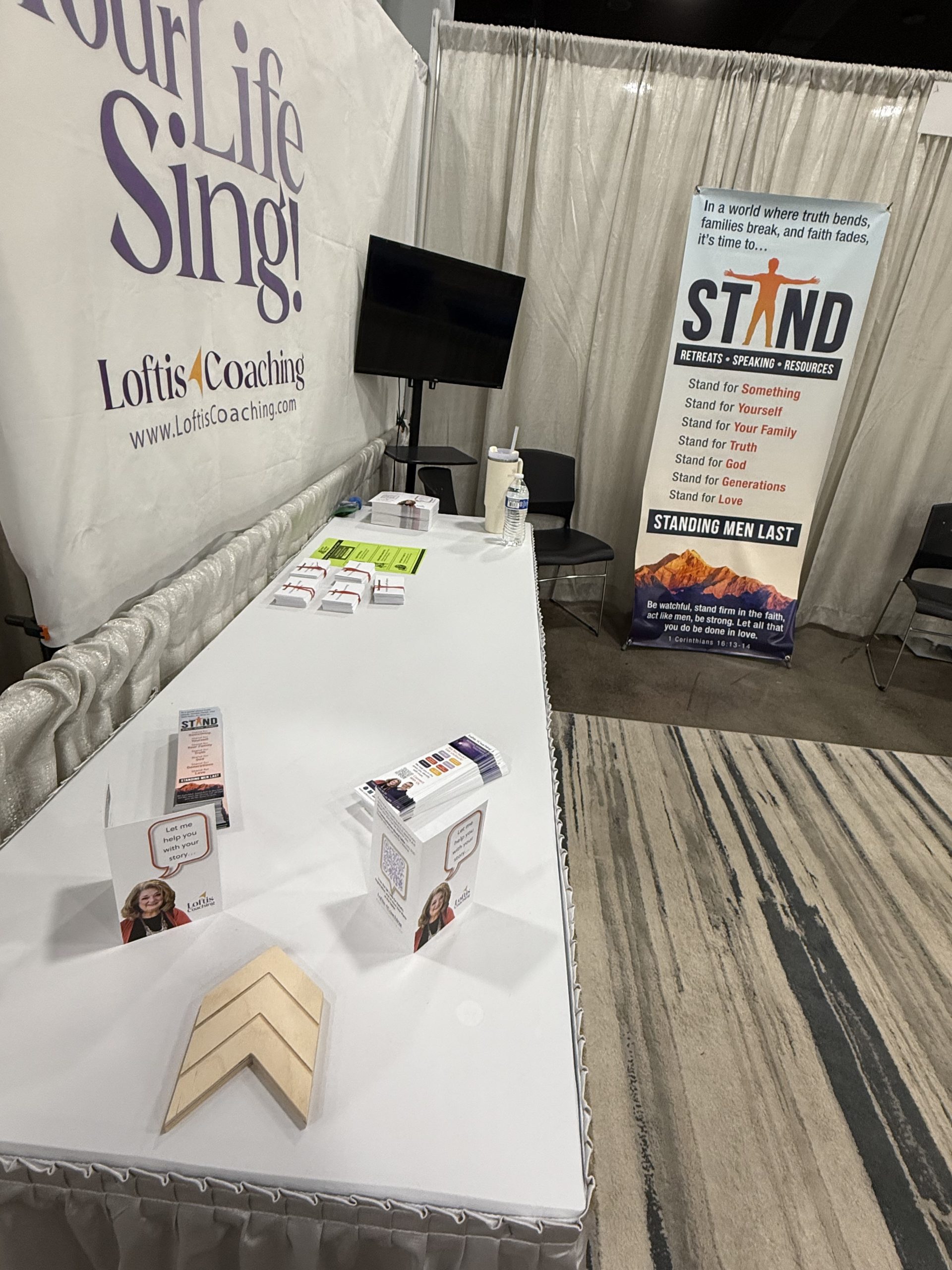
This year, during conference season, I will be representing Loftis Coaching and BuildingYourBand from the other side of the table. I look forward to the opportunity to connect with you and discuss your specific goals or interests. I welcome meaningful conversations about how we can mutually inspire and support one another, as well as share the impactful connections that make these conferences truly valuable experiences.

Enjoy your conference!

Moving Forward: Not a Life Hack

Moving Forward: Not a Life Hack

I’ve been fascinated recently by a number of life hacks that have caught my attention. I’m a handyman/fix-it guy and I’ve also enjoyed original menu cooking a lot the last two years. Want to guess what’s coming across my social media feed a lot these days? Life hacks on handyman projects and dozens of original four and six-ingredient recipes. They’re so easy dash and they always taste – yummmm – so good! But do they? Really? More importantly, does this approach work for all of life?

Many people see the concept of spiritual growth like they see another reel on Facebook or Instagram. There has to be a life hack to accomplish spiritual growth and development. Leaders are looking for the same thing for their churches. Desperate to find the next healthy functioning servant-hearted Deacon or elder for their church, they’re constantly discouraged and stuck with the same guys they had last year, who are in the same place they were last year.

Mind you, these pastors have taken all the life hacks available to them: Discipleship ladders, leadership ladders, growth pathways, “disciple now” courses and retreats and seminars, and conferences. There may have been some progress, but it’s just so slow.

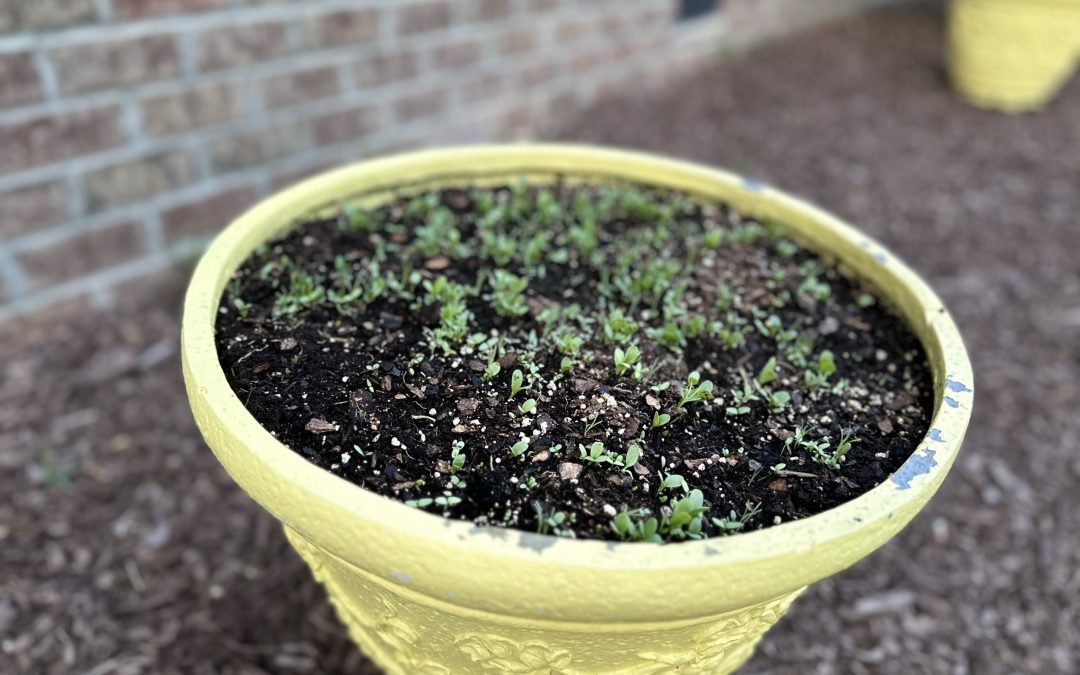
The great encouragement I want to give you today is a reality check: personal development or leadership savvy, or spiritual growth cannot be reduced to a life hack. We cannot grow disciples quickly any more than we can grow vegetables quickly. The growth process remains the same as it has for generations: 1. Prepare the soil, 2. Find good, dependable seed. 3. Wait for the opportune time to plant. 4. Water that seed, and then wait…. If growth happens, we nourish the plant with more water, removal of weeds, pruning, and – you guessed it – more water.

It’s no coincidence that Jesus used agricultural illustrations to describe the process of growth to his disciples. It was not simply because they were in an agrarian culture. He knew these stories were going to last for generations and he knew that eventually men would get back to trying to depend upon themselves once again whatever it is they would need.

There is no substitute for abiding in the vine. There is no substitute for growing the seed of the gospel in good soil watered by the word of faith and a heart of love and a face full of joy. But these are not life hacks. These are fruit of the Spirit manifest in a mature believer who then passes those traits on to a young disciple with tender leaves longing for something better in life.

The great news is, we’re not saying growth takes decades to develop. But it won’t take hours and days and weeks either. If we like the farmer Jesus described; that is, if we can be patient and dependent, faithful and present, beautiful growth happens – in His time.

Building Resilient Leaders – and Followers

Building Resilient Leaders – and Followers

After they had preached the gospel in that town and made many disciples, they returned to Lystra, to Iconium, and to Antioch, strengthening the disciples by encouraging them to continue in the faith and by telling them, “It is necessary to go through many hardships to enter the kingdom of God.” When they had appointed elders for them in every church and prayed with fasting, they committed them to the Lord in whom they had believed.
– Acts 14:21-23

This is an interesting passage of Scripture. Here is an account of how God used Paul & Barnabas to spread the Gospel through these towns, then to retrace their steps so they could build resilient leaders and followers. They did it with three things: they strengthened the disciples, sought to prepare them for coming hardships and appointed leaders there. All three activities were essential for the perpetuation of the early church in its formative stages.

How important are these assignments today, over 2000 years later?

If we were to grade today’s church, how well are strong disciples prepared for leadership and hardship? How can we cultivate resilient leaders and followers ready for ministry challenges in a changing landscape?

Declining Leadership Strength

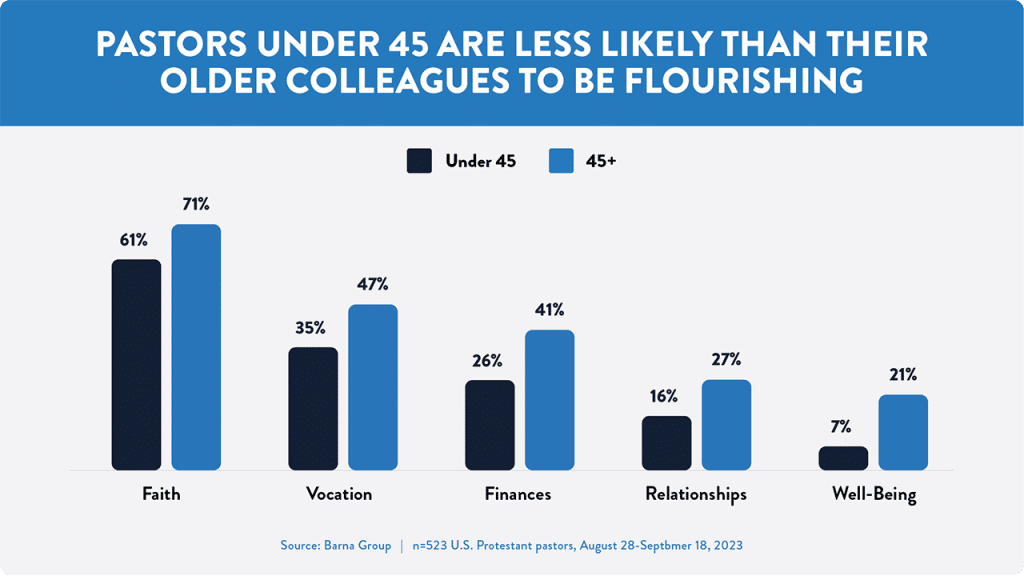
I think about our church leaders today. Cary Nieuwhof says (in his article on Disruptive Church Trends for 2025) our church leaders are in crisis emotionally.  In particular, the younger generation of pastors is struggling deeply.  Look at this chart he shared, which identifies the struggles of the younger generation to flourish as pastors:

According to another aspect of this Barna study, 18% of pastors have considered self-harm or suicide. If church leaders are struggling so much, how can they build resilient and healthy disciples? What is the fundamental issue?

Why are pastors so strung out in ministry?

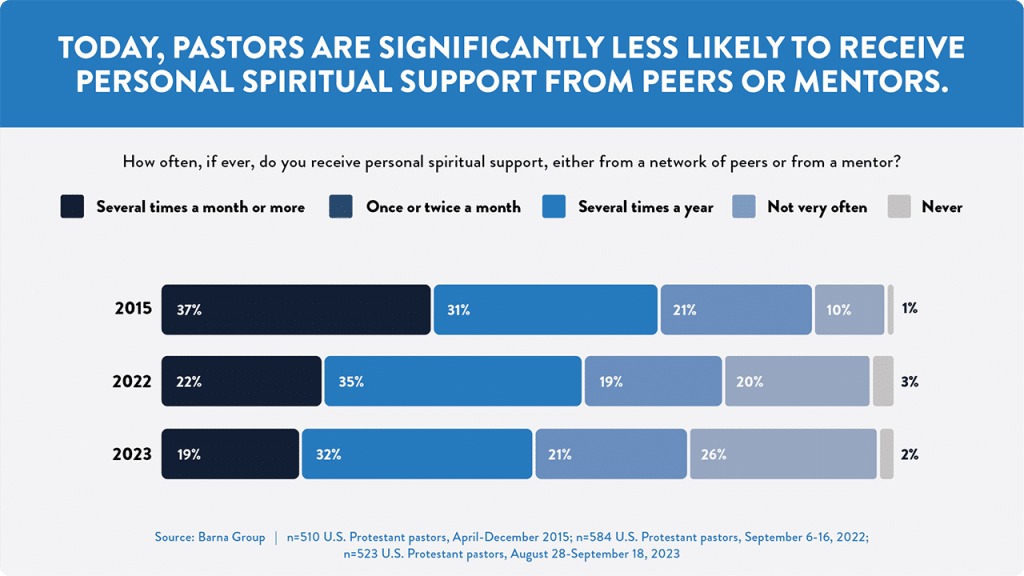
The isolation among pastors has increased over the past thirty years. Many pastors report having no significant relationships. Nieuwhof’s study shows that in the last decade, pastors’ ability to seek help has decreased by more than half:

We were never meant to “go it alone.”

The message of simply depending on the Spirit of God without a team of godly allies leads to isolation, which is where Satan does his best work. He began his first attack on Eve in isolation; and has continued to seek to isolate God’s people ever since. Notice that Moses’ greatest crises were when he was alone? When was Elijah the most depressed? Jesus Himself faced his greatest temptations when alone in the wilderness and in the garden.

God has put on my heart a determination to speak into this particular dilemma: to strengthen the disciples, prepare for coming hardships and appoint leaders. What’s fascinating is, for me it has come out of the day to day work of the ministry. The reality of life is, ministry is hard. Caring for sheep, hearing their heartaches and serving them before yourself on a regular basis is draining.

The only way we as a couple have sustained the daily grind of ministry, with all its crises, disappointments, betrayals, losses, tragedies and failures is a constant return to the feet of the Father through Jesus in the power of the Spirit.

Basic spiritual habits, or rhythms, or the heart have sustained our faith and fortified our souls for the tough times, whether from within our own souls, in our family, or in our churches.

These rhythms were reinforced and bonded by a constant relationship with men and women who were in the struggle with us. In our 41 years of ministry I can count on two hands the number of months we had no support at all. Why? We knew it was too critical to our survival spiritually. We need the support of God’s people.

It’s interesting that in our darkest moments one of Satan’s ploys against us has been to try and separate us from those we love the most, so we were left in isolation. When he gets us disconnected with our prayer band, our foxhole friends, we are vulnerable to the greatest failures. To counter this, we have worked diligently to maintain our closest ministry relationships. They have rarely been ministry team relationships: instead they were men and women who were in the trenches with us: praying, studying, praising, laughing, crying, breaking bread, celebrating, defending and holding one another.

It is one of the reasons we are involved in Spiritual Formation and Resilience coaching as a part of Loftis Coaching. We believe that foundational to anyone’s journey through life are the healthy rhythms of the heart and the people who share those rhythms with us. With them we can walk through the darkest valleys, because He is with us. Without them we are susceptible to spiritual disease, discouragement or impending disaster.

Paul leaned into these elements in his early ministry for a reason. Building resilient leaders and followers requires these elements. These three things are the essence of continued health among our churches. This is the essence of biblical ministry. How we do that will be critical to the health of our churches and ministries in coming days!

Pray this prayer with me:

Dear Father, we really need Your help to accomplish this massive task. You have called us to a new task; to boldly awaken believers to critical tasks of discipleship and leadership for Your kingdom. This includes letting them in on the realities of ministry; there will be hardships. There will be difficult times. There will be betrayals. We will be hated, just as You told us. Will You clarify for us the best way to go about this? Help us, Lord as a team to find the right paths, and to overcome the barriers that would hinder us from doing this well. Give us boldness and the influence we need to accomplish these tasks for Your glory.